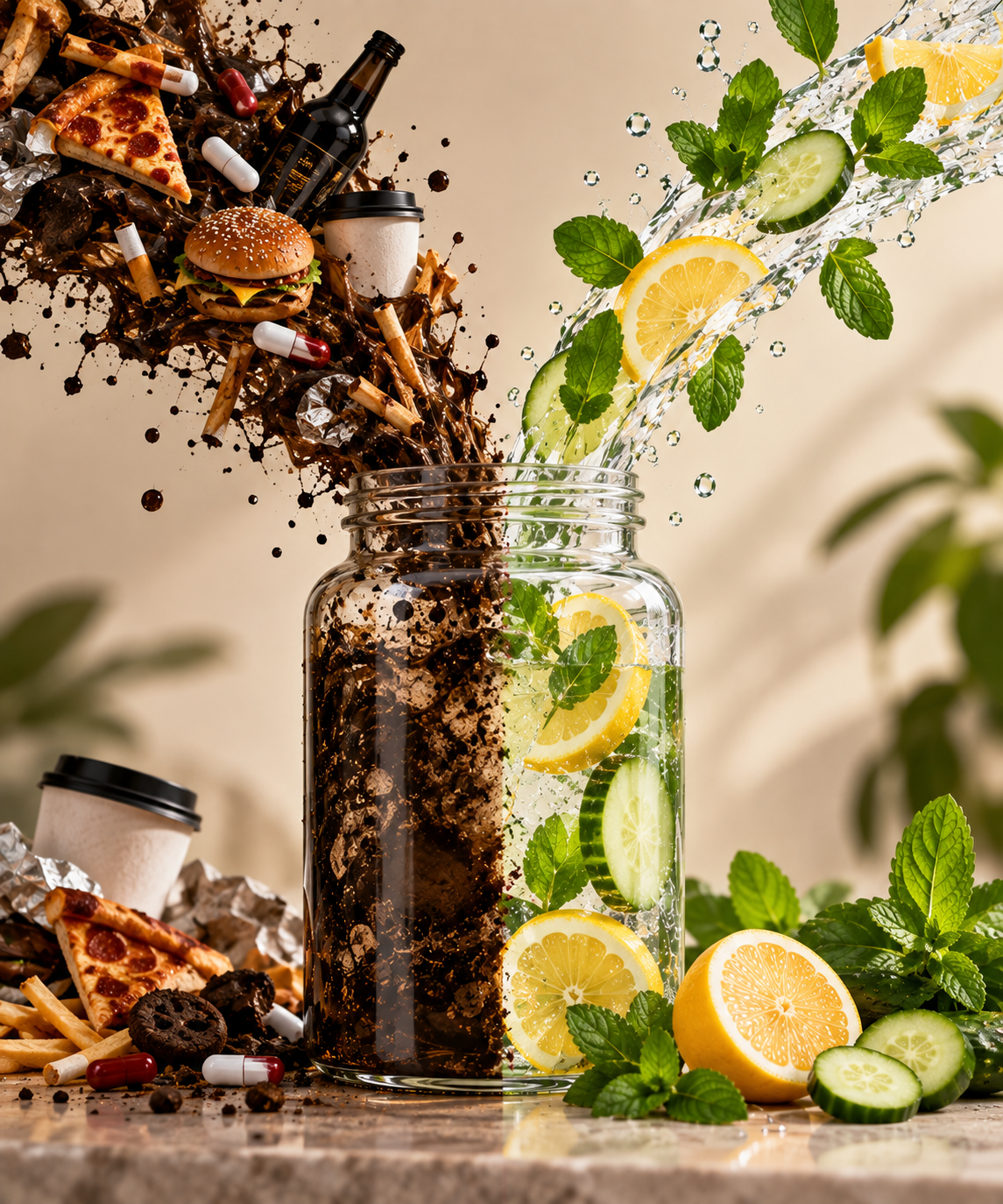
You have probably heard people talk about taking a body cleanser when they feel bloated, heavy, constipated or sluggish. Others turn to cleansing products after periods of unhealthy eating, drinking alcohol or simply feeling like their body needs a “reset.”
But what does a body cleanser actually do?
Despite how some products are marketed, your body does not simply store toxins until a special drink or herbal mixture washes them away. Your liver, kidneys and digestive system are already working every day to process substances and eliminate waste.
A body cleanser is better understood as something that may support digestive wellness and healthy elimination, depending on its ingredients, rather than something that replaces your body’s natural cleansing systems.
Let’s take a closer look.
What Is a Body Cleanser?
A body cleanser is a general wellness term used for products intended to support cleansing, digestion or bowel regularity.
Body cleansers may come in different forms, including herbal teas, herbal mixtures, powders, supplements, fibre products or food-based cleansing programmes.
Because these products contain different ingredients, they don’t all work in the same way.
Some focus primarily on encouraging bowel movements. Others contain herbs traditionally used to support digestion, while some cleansing programmes simply encourage increased water, fruit, vegetables and fibre intake.
This is why you should always examine the ingredients and intended purpose rather than relying solely on words such as “cleanse” or “detox.”
How Does Your Body Naturally Cleanse Itself?
Your body already has sophisticated systems responsible for processing substances and removing waste.
The Liver
Your liver performs hundreds of functions. Among them, it processes nutrients, medications, alcohol and other substances circulating through your body.
It helps transform substances so they can either be used or safely eliminated.
The Kidneys
Your kidneys continuously filter your blood. They remove waste and excess water, which eventually leave your body through urine.
They also play important roles in maintaining fluid and mineral balance.
The Digestive System
Your digestive system breaks down food, absorbs nutrients and moves waste toward elimination.
Regular bowel movements are therefore an important part of digestive health.
Adequate water, dietary fibre, balanced nutrition and physical activity can all contribute to maintaining normal bowel function.
What Does a Body Cleanser Actually Do?
The answer depends largely on the ingredients.
A body cleanser cannot replace your liver or kidneys, nor should it be expected to magically remove years of accumulated “toxins.”
However, certain cleansing products and routines may support aspects of digestive wellness.
1. It May Support Bowel Regularity
Some body cleansers contain fibre or herbal ingredients traditionally used to encourage bowel movements.
Dietary fibre can help add bulk to stool and support normal movement through the digestive system.
This may be particularly relevant for people whose everyday diets contain very little fibre.
However, suddenly increasing fibre intake can sometimes cause gas or bloating, so gradual dietary changes are usually preferable.
2. It May Encourage Hydration
Many cleansing routines encourage people to drink more water or herbal beverages.
This can be helpful if someone previously wasn’t consuming enough fluids.
Water supports normal digestion and kidney function. However, drinking excessive amounts isn’t necessary to “flush” the body and can be harmful in extreme cases.
3. It Can Encourage Healthier Eating
Sometimes the positive effects people associate with a cleanse may actually come from changes they make while cleansing.
For example, someone might temporarily reduce highly processed foods, excessive sugar, alcohol and heavy meals while consuming more vegetables, fruits and whole foods.
Those dietary improvements can naturally affect how they feel.
Body Cleanser vs. Detox: What’s the Difference?
“Body cleanser” and “detox” are often used interchangeably, but they’re not necessarily the same thing.
Cleansing is commonly associated with digestion and bowel movements, while detox products may be marketed as removing unwanted substances from different parts of the body.
There is no universally accepted medical definition for commercial cleansing and detox programmes.
That’s why dramatic claims such as “removes all toxins,” “cleans your organs” or “completely detoxifies your body” should be approached cautiously.
Do You Really Need a Body Cleanser?
People frequently search for a body cleanser because they’re experiencing:
- Bloating or heaviness
- Constipation
- Irregular bowel movements
- Digestive discomfort
- Low energy or sluggishness
- Changes after periods of unhealthy eating
However, these symptoms don’t automatically mean toxins have accumulated in your body.
Bloating, constipation and fatigue can have many different causes. Persistent or severe symptoms should be discussed with a qualified healthcare professional rather than repeatedly treated with cleansing products.
How to Support Your Body’s Natural Cleansing Process
A healthy lifestyle remains one of the best ways to support the systems your body already uses.
Stay Hydrated
Drinking adequate water supports digestion, circulation and normal kidney function.
Your individual needs may vary depending on your activity level, environment, diet and overall health.
Eat Fibre-Rich Foods
Include foods such as fruits, vegetables, beans, lentils, whole grains, nuts and seeds.
Fibre supports digestive health and regular bowel movements.
Stay Active
Physical activity supports overall health and can also help maintain normal bowel function.
Even regular walking can contribute to a healthier routine.
Get Enough Sleep
Good health isn’t only about food.
Adequate sleep gives your body the opportunity to perform many essential processes and helps support overall wellbeing.
What Should You Look for in a Body Cleanser?
If you’re considering a body cleanser, look beyond attractive packaging and dramatic promises.
Check the ingredients and understand their intended purpose. Follow the recommended directions and avoid assuming that taking more will produce better results.
“Natural” also doesn’t automatically mean risk-free.
Certain herbs and supplements may interact with medications or may not be appropriate for everyone. People who are pregnant or breastfeeding or who have kidney, liver, gastrointestinal or other chronic health conditions should consult an appropriate healthcare professional before starting herbal supplements or intensive cleansing programmes.
A Body Cleanser Should Complement Healthy Habits
A cleanser shouldn’t become a substitute for healthy living.
Taking a body cleanser for a few days cannot compensate for months of poor nutrition, inadequate water, little physical activity and insufficient sleep.
Instead, think long term.
Eat balanced meals. Drink enough water. Consume adequate fibre. Stay active. Prioritise sleep. And pay attention when your body consistently feels different.
A body cleanser may complement those habits depending on its formulation, but sustainable wellness begins with what you consistently do every day.
The Bottom Line
So, what does a body cleanser really do?
The answer depends on what’s inside it.
Certain body cleansers may support digestive regularity or complement healthy lifestyle habits, but your body already has natural systems for processing substances and eliminating waste.
Rather than expecting a cleanser to magically “flush toxins,” focus on supporting your liver, kidneys and digestive system through hydration, nutritious food, fibre, movement and adequate rest.
Looking for Herbal Wellness Support?
If you’re looking to complement your wellness routine with herbal products, check out Denik Herbal Clinsa by Ekiema the best herbal wellness solutions designed to fit into a more intentional approach to everyday wellbeing.