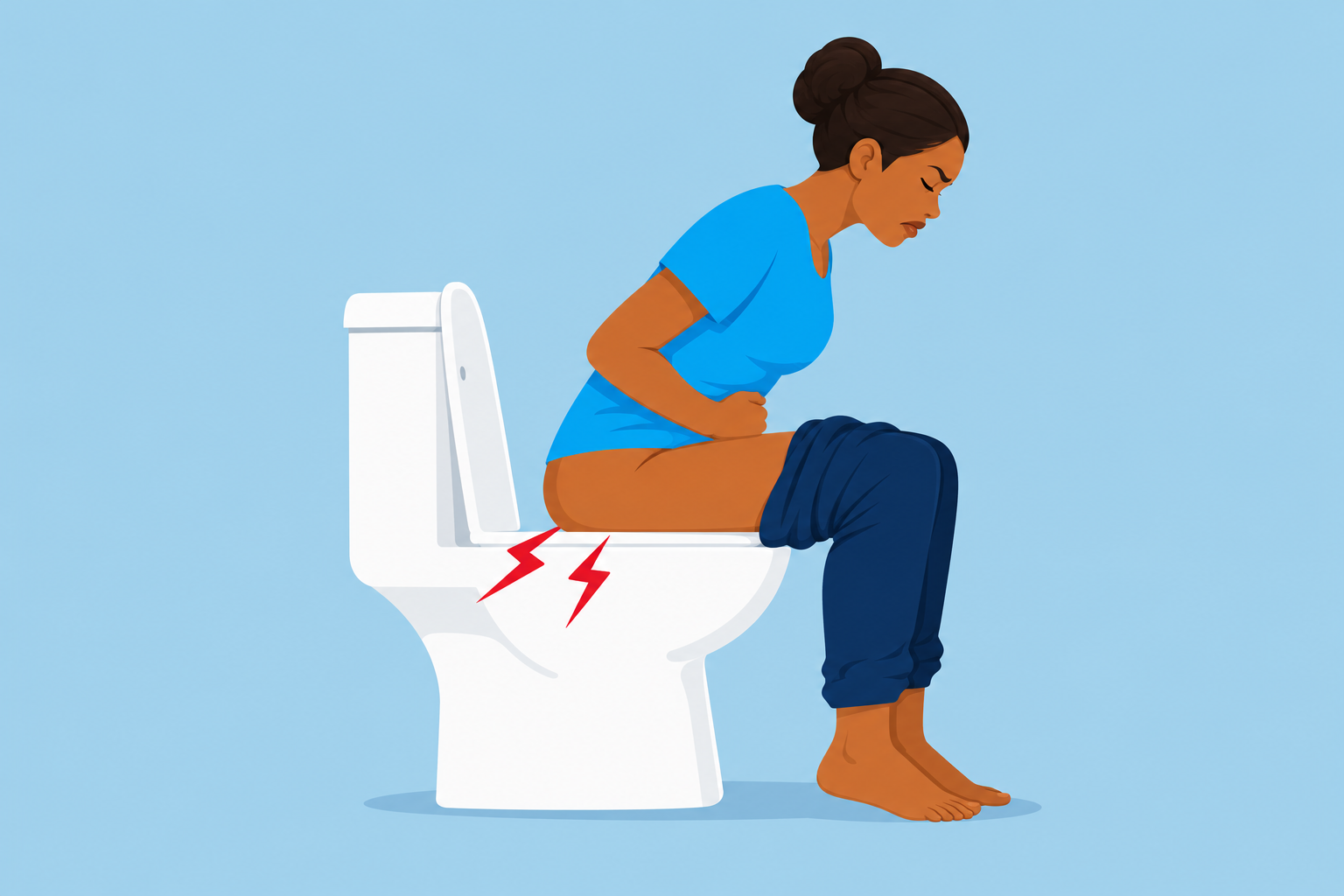
Seeing blood after using the toilet can be alarming. One possible cause is bleeding piles, also known as bleeding hemorrhoids. Piles are swollen veins in or around the anus and lower rectum, and they can sometimes bleed during bowel movements.
Bleeding from hemorrhoids is often bright red and may appear on toilet paper, on the surface of stool or in the toilet bowl. However, rectal bleeding should not automatically be assumed to be piles because several other conditions can cause it.
Understanding the symptoms, possible causes and available treatment options can help you know what steps to take.
What Are Bleeding Piles?
Piles develop when veins around the anus or lower rectum become swollen. They are generally classified as either internal or external hemorrhoids.
Internal Piles
Internal hemorrhoids develop inside the rectum. Because this area has fewer pain-sensitive nerves, they may initially cause little discomfort.
Bleeding during a bowel movement can sometimes be the first noticeable symptom.
External Piles
External hemorrhoids develop beneath the skin around the anus. They may cause swelling, itching, irritation and pain.
External hemorrhoids can sometimes develop a blood clot, known as a thrombosed hemorrhoid, which may cause significant pain and swelling.
What Causes Bleeding Piles?
Bleeding can occur when swollen hemorrhoidal tissue becomes irritated or damaged, particularly during bowel movements.
Several factors can contribute to the development or irritation of piles.
1. Constipation and Straining
Constipation is a common contributor. Hard stools can make bowel movements difficult, leading to repeated straining.
This increases pressure on veins around the anus and may irritate existing hemorrhoids.
2. Sitting on the Toilet for Too Long
Spending excessive amounts of time sitting on the toilet can increase pressure around the rectal area.
Try to avoid scrolling through your phone or reading for extended periods while using the toilet.
3. Pregnancy
Pregnancy can increase pressure on veins in the pelvic area, making hemorrhoids more common. Straining during childbirth may also contribute.
4. Chronic Diarrhoea
Repeated bowel movements and irritation can contribute to hemorrhoid symptoms in some people.
5. Low-Fibre Diet
A diet lacking adequate fibre can contribute to constipation and hard stools, increasing the likelihood of straining.
What Do Bleeding Piles Look Like?
Blood associated with hemorrhoids is commonly bright red.
You might notice a small amount on toilet tissue after wiping, streaks on the outside of stool or drops of blood in the toilet.
However, you cannot reliably determine the cause of rectal bleeding simply by looking at its colour.
Is Bleeding From Piles Dangerous?
Small amounts of occasional bleeding associated with confirmed hemorrhoids may not necessarily indicate an emergency.
However, persistent, heavy or unexplained bleeding requires medical assessment.
Repeated blood loss can also contribute to anaemia in some circumstances, making proper evaluation important.
Other Symptoms That May Occur With Bleeding Piles
Bleeding piles may occur alongside other hemorrhoid symptoms, including:
- Itching around the anus
- Swelling or irritation
- Pain during or after bowel movements
- A lump around the anus
- Mucus after passing stool
- A feeling that you still need to pass stool
Symptoms vary between individuals and according to whether the hemorrhoids are internal or external.
How Can You Get Relief From Bleeding Piles?
Treatment depends on the severity and underlying cause. Mild hemorrhoids may improve with lifestyle changes and appropriate home care.
Increase Your Fibre Intake
Eating more fibre can help soften stools and make them easier to pass.
Vegetables, fruits, beans and whole grains are useful dietary sources.
Increasing fibre gradually can help reduce digestive discomfort while your body adjusts.
Stay Properly Hydrated
Drinking adequate fluids can help prevent stools from becoming excessively hard.
Combining good hydration with sufficient dietary fibre can make bowel movements easier and reduce straining.
Avoid Straining
Don’t force a bowel movement.
If constipation is a recurring problem, address the constipation rather than repeatedly straining, as this can worsen hemorrhoids.
Try Warm Sitz Baths
Sitting in warm water for several minutes may temporarily soothe itching, irritation and discomfort around the anal area.
Ekiema Pile Care for Pile-Related Wellness
Ekiema Wellness a Top Herbal Remedy brand in Nigeria and number 1 alternative and herbal remedies company in Nigeria offers Pile Care as part of its herbal wellness range.
Ekiema Pile Care is an effective remedy and best approach for piles, visit ekiemawellness.com.ng to explore Pile Care and other Ekiema Wellness products.
When Should You See a Doctor for Bleeding Piles?
Because rectal bleeding isn’t exclusive to hemorrhoids, knowing when to seek professional care is important.
Persistent or Recurring Bleeding
If bleeding repeatedly occurs or doesn’t improve, arrange a medical assessment.
Heavy Bleeding
Seek prompt medical attention if you’re losing a significant amount of blood or passing large blood clots.
Severe Pain
Sudden, severe anal pain can sometimes occur with a thrombosed external hemorrhoid and should be assessed.
Dizziness, Weakness or Fainting
Rectal bleeding accompanied by dizziness, fainting, significant weakness or other signs of substantial blood loss requires urgent medical attention.
Changes in Your Bowel Habits
Speak with a healthcare professional if rectal bleeding occurs alongside unexplained weight loss, persistent abdominal discomfort or a significant change in your usual bowel habits.
These symptoms don’t automatically indicate a serious disease, but they deserve appropriate investigation.
Medical Treatment for Persistent Bleeding Piles
If lifestyle changes don’t resolve the problem, a healthcare professional may recommend additional treatment.
Depending on the type and severity of hemorrhoids, medical options can include rubber-band ligation, sclerotherapy, infrared coagulation or surgical treatment.
A healthcare professional can determine which approach is appropriate after confirming the diagnosis.
How Can You Reduce the Risk of Piles Returning?
Preventing constipation is one of the most practical steps.
Eat enough fibre, drink adequate fluids, exercise regularly and respond to the urge to have a bowel movement rather than repeatedly delaying it.
Avoid unnecessary straining and spending long periods sitting on the toilet.
These habits can reduce pressure on the veins around the anus and support healthier bowel movements.
Don’t Ignore Bleeding Piles
Bleeding piles are common, but rectal bleeding deserves attention.
If you already have diagnosed hemorrhoids, improving your diet, hydration and toilet habits may help reduce irritation and discomfort. But if bleeding persists, becomes heavy or occurs alongside other concerning symptoms, speak with a healthcare professional.